
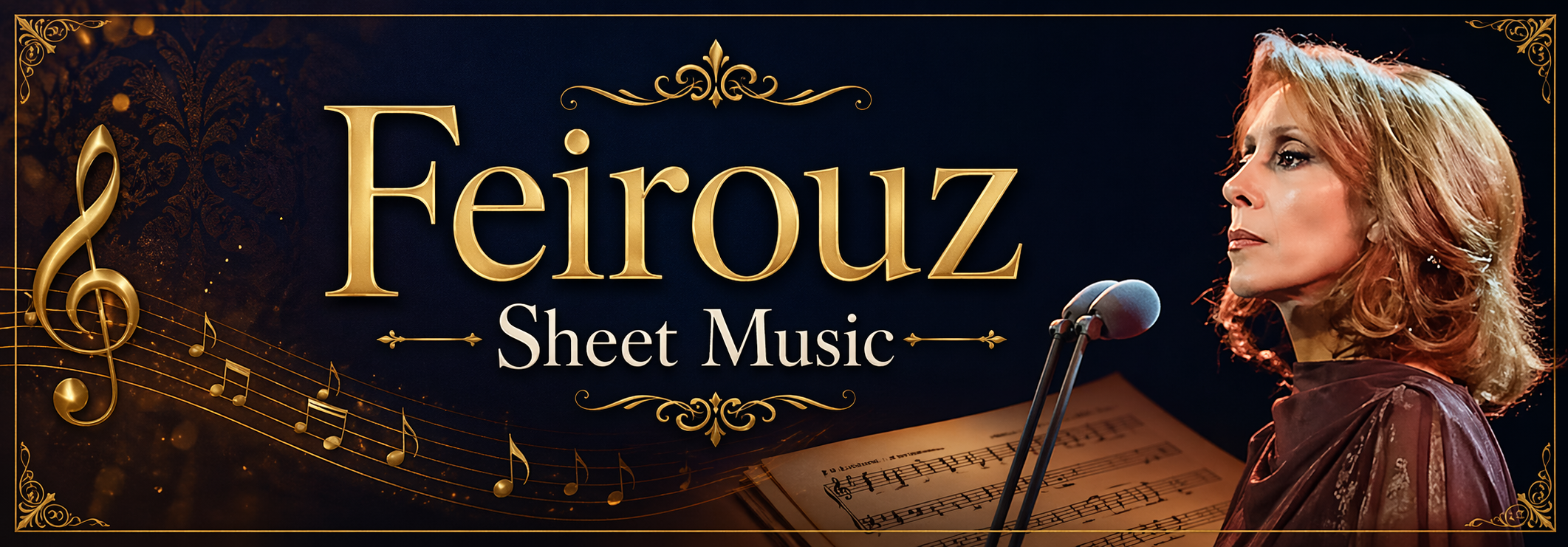
Feirouz Songs Sheet Music
Please click on any of the Topics below for Details
Fairuz: Life and Artistic Journey
🎼 Early Life
-
Birth name: Nouhad Wadie Haddad
-
Born: 20 or 21 November 1934/1935, in Beirut, Lebanon
-
Raised in a modest family; her father worked in a printing press.
-
Her talent was discovered early by Lebanese musician Mohammad Fleifel, who encouraged her to study at the Lebanese Conservatory.
📻 Beginnings in Radio
-
Fairuz began her career in the late 1940s as a chorus singer at the Lebanese national radio station.
-
Her first major hit, “Itab” (1952), made her instantly famous across the Arab world.
🎶 The Rahbani Era: A New Sound in Arabic Music
✨ Collaboration with the Rahbani Brothers
-
Meeting Assi and Mansour Rahbani transformed her career.
-
Together, they created a new Lebanese musical identity blending:
-
Folk melodies
-
Western harmonies
-
Poetic, simple, deeply emotional lyrics
-
-
Fairuz married Assi Rahbani in 1955 and became the central voice of the Rahbani musical universe.
🎭 Musical Plays & National Identity
Fairuz starred in more than 20 musical plays, performed at festivals, and became the voice of Lebanon’s cultural renaissance. Her first major stage appearance was at the Baalbeck International Festival in 1957, where she received the prestigious “Cavalier” medal.
🎤 Her Singing Style
🌙 A Voice Like No Other
Fairuz’s voice is often described as:
-
Pure and crystalline
-
Emotionally restrained yet deeply expressive
-
Capable of conveying nostalgia, longing, and spiritual calm
She is widely known by titles such as: “The Bird of the East,” “The Voice of Lebanon,” “The Cedar of Lebanon,” and “Our Ambassador to the Stars.”
🎵 Musical Characteristics
-
Moderate vocal range but exceptional clarity and control
-
Mastery of maqam-based melodies blended with Western orchestration
-
Ability to make short songs feel like complete emotional worlds
-
A unique blend of folk, classical Arabic, and modern Lebanese styles
🎹 Later Career: The Era of Ziad Rahbani
After Assi Rahbani’s illness in the 1970s, Fairuz began a new artistic chapter with her son Ziad Rahbani, who introduced:
-
Jazz harmonies
-
Urban, contemporary themes
-
More daring emotional expression
This era produced classics like:
-
“Saalouni el-Nas”
-
“Kifak Inta”
-
“Bektob Ismak Ya Habibi”
🌍 Global Influence
Fairuz performed in major venues worldwide, including:
-
Carnegie Hall (New York)
-
Royal Albert Hall (London)
-
L’Olympia (Paris)
Her fame spread across the Middle East, North Africa, Europe, and the Americas. She remains one of the most admired and respected living Arab singers.
🎧 Signature Songs
Some of her most beloved works include:
-
Nassam Alayna el-Hawa
-
Kan Enna Tahoun
-
Li Beirut
-
Habbaytak Bel Sayf
-
Ya Tayr
-
Aatini el-Nay
Her catalog includes hundreds of songs and dozens of albums spanning over seven decades.
🌟 Why Fairuz Is Timeless
-
She shaped the modern Lebanese musical identity.
-
Her voice became a symbol of hope during Lebanon’s civil war.
-
She bridged classical Arabic tradition with modern aesthetics.
-
Her music is still played daily across the Arab world—especially in the morning.
فيروز: سيرة حياة وصوت لا يشبه أحدًا
فيروز (نهاد حدّاد) هي أيقونة الغناء العربي، صوت لبنان الأول، وإحدى أكثر الفنانات تأثيرًا في القرن العشرين. بدأت مسيرتها من إذاعة لبنان في الأربعينيات، ثم أصبحت رمزًا فنيًا وثقافيًا عالميًا بفضل تعاونها مع الأخوين رحباني، وتقديمها لأكثر من 1500 أغنية و20 مسرحية غنائية.
🌿 أولًا: حياتها
🎼 النشأة والبدايات
-
الاسم الحقيقي: نهاد وديع حدّاد.
-
الميلاد: 20 أو 21 نوفمبر 1934/1935 في بيروت.
-
تنتمي إلى عائلة بسيطة؛ والدها كان يعمل في مطبعة، وموهبتها اكتُشفت في جوقة المدرسة.
-
اكتشفها الموسيقي محمد فليفل، فدرّبها على الغناء ومنحها منحة للدراسة في المعهد الموسيقي اللبناني.
📻 البداية في الإذاعة
-
بدأت في أواخر الأربعينيات كعضو في كورال إذاعة لبنان.
-
في الإذاعة التقت الأخوين رحباني، وبدأت معهم رحلة فنية ستغيّر وجه الموسيقى العربية.
💍 الحياة الشخصية
-
تزوجت من عاصي الرحباني عام 1955، وأنجبت أربعة أبناء، بينهم الموسيقي زياد الرحباني.
-
بعد مرض عاصي في السبعينيات، بدأت تعاونًا جديدًا مع زياد، ما أطلق مرحلة فنية مختلفة وأكثر جرأة.
🎶 ثانيًا: مسيرتها الغنائية
🌟 1. التعاون مع الأخوين رحباني
هذا التعاون هو العمود الفقري لمسيرة فيروز. قدّما معًا:
-
أغاني قصيرة أصبحت جزءًا من الذاكرة العربية.
-
مسرحيات غنائية مثل: بياع الخواتم، جسر القمر، هالة والملك.
-
أغاني وطنية رسّخت صورتها كصوت لبنان.
🎤 2. صوتها وأسلوبها
-
صوت صافٍ، دافئ، ذو مساحة متوسطة لكن تعبيرية للغاية.
-
قدرة على المزج بين الطرب والأسلوب الغربي في التوزيع.
-
إحساس عميق بالكلمة، يجعل الأغنية القصيرة تبدو كلوحة كاملة.
🎼 3. الانتشار العربي والعالمي
-
أول حفلة كبرى لها كانت في مهرجان بعلبك 1957، حيث مُنحت وسام “الفارس” تقديرًا لفنها.
-
غنّت في أهم مسارح العالم:
-
كارنيغي هول – نيويورك
-
ألبرت هول – لندن
-
الأولمبيا – باريس
-
-
باعت أكثر من 150 مليون تسجيل، وهو رقم يجعلها من أكثر الفنانين مبيعًا عالميًا.
🎭 4. فيروز والمسرح الغنائي
قدّمت 20 مسرحية غنائية، شكّلت مدرسة خاصة في المسرح العربي، حيث امتزجت الموسيقى بالدراما والشعر والرقص.
🎹 5. مرحلة زياد الرحباني
ابتداءً من أواخر السبعينيات:
-
أسلوب أكثر حداثة وجازًا.
-
أغانٍ مثل: سألوني الناس، كيفك إنت، ولا مرة، مش كاين هيك تكون.
-
هذه المرحلة أعادت تقديم فيروز لجيل جديد.
🎧 ثالثًا: أشهر أغاني فيروز
🌅 الأغاني الوجدانية
-
نسم علينا الهوى
-
كان عنا طاحون
-
سألوني الناس
-
بكتب اسمك يا حبيبي
🇱🇧 الأغاني الوطنية
-
بحبك يا لبنان
-
لبيروت
-
رجع أيلول
🎭 من المسرحيات
-
يا أنا يا أنا
-
طيري يا طيارة
-
حنا السكران
🎼 الأغاني المبكرة (الخمسينيات)
-
عتاب (أول نجاح كبير لها عام 1952).
🌟 رابعًا: لماذا تُعد فيروز ظاهرة؟
-
لأنها جسّدت هوية لبنان بصوتها.
-
لأنها قدّمت مدرسة لحنية جديدة مع الرحابنة.
-
لأنها الوحيدة التي أحبّها الجمهور العربي من الخليج إلى المغرب دون خلاف.
-
لأنها غنّت للحب، للوطن، للإنسان، وللأمل بلغة بسيطة وراقية