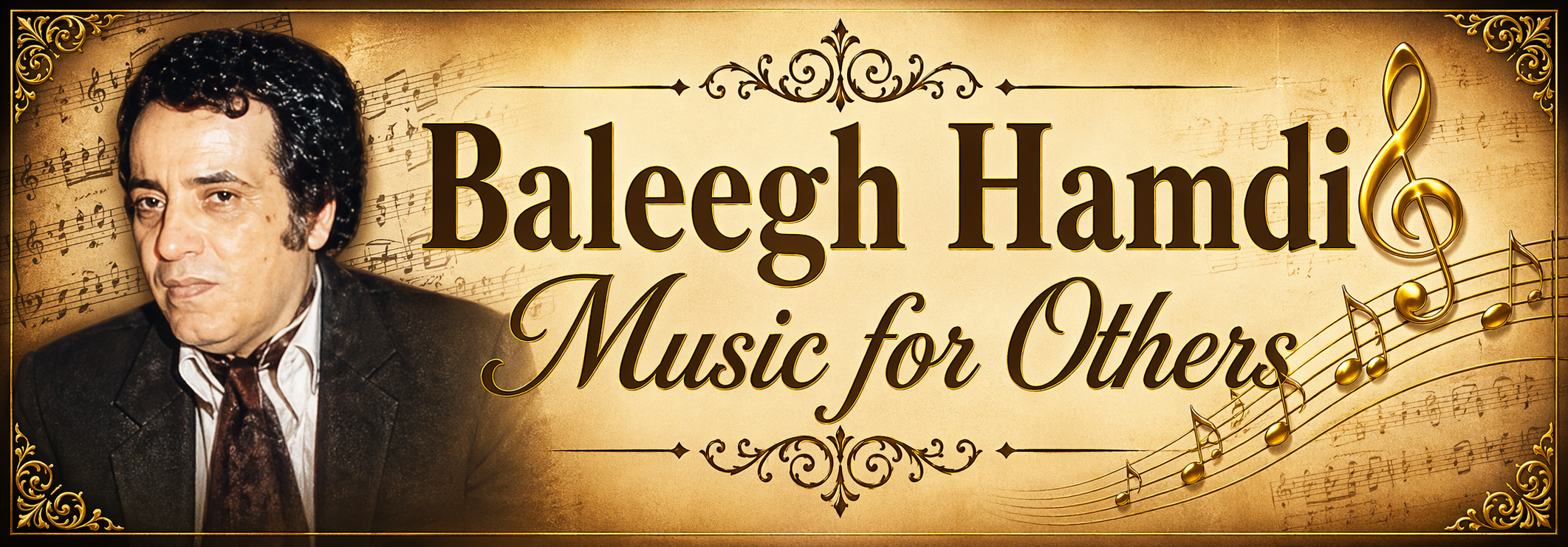
Baleegh Hamdi Music for Others
52 Music and Song compositions sung by:
Um Kalthoum, Abdilhaleem Hafiz, Fayza Ahmad,
Sabah, Shadia, Mayyada al-Hinnawi and Warda
Unit Price $9.95. When transaction is complete, Paypal will direct you to link to download a zipped folder. Download folder, un-zip (extract) folder, open folder and click on the file “index.htm” which is the table of contents
This Page is under construction
Balīgh Ḥamdī: Life and Music
🎼 1. Early Life
- Full name: Balīgh ʿAbd al‑Ḥamīd Ḥamdī Mursī
- Born: 7 October 1931, Shubra district, Cairo
- Died: 12 September 1993, Paris, France
- His father was a physics professor at King Fuad I University (now Cairo University) .
- Learned violin at age 9, and oud in early teens .
- Began as a law student, but abandoned law to pursue music full‑time.
By 1954, at age 22, he was already a professional musician and composer .
🎶 2. Rise to Fame
Balīgh Ḥamdī’s career took off in the mid‑1950s, when his compositions began receiving wide acclaim.
Early successes included:
- “Hob Eih” — sung by Umm Kulthum, a major breakthrough hit
- “Tkhounoh” — Abdel Halim Hafez
- “Ma Tehbneesh Be El Shakl Da” — Fayza Ahmed
- “Why No” — Fayda Kamel
By the 1960s–1970s, he became one of the most popular and productive composers in the Arab world .
🎤 3. Musical Style
Balīgh Ḥamdī’s music is instantly recognizable for its emotional depth and innovative sound.
🎵 Key characteristics
- Deep inspiration from Egyptian folk melodies and rhythms
- Heavy use of string orchestra for a classical, lush sound
- Integration of electronic keyboards and guitars in harmony with strings — a modern touch for the era
- Melodies that balance simplicity, emotional power, and dramatic build‑up
He is often called “King of Melody” for his ability to craft unforgettable tunes .
🎙️ 4. Major Collaborations
Balīgh Ḥamdī composed for nearly every major singer of his time:
⭐ Umm Kulthum
- “Hob Eih”
- “Alf Leila wa Leila” (1001 Nights) — one of her greatest late‑career masterpieces
⭐ Abdel Halim Hafez
- “Tkhounoh”
- “Khosara Khosara” — later sampled by Jay‑Z and Earl Sweatshirt
⭐ Warda Al‑Jazairia (his wife for a decade)
- Composed most of her iconic songs
- Their artistic partnership produced classics like “Bawadaak” and “Ya Nakhlatin fi al‑Alali”
⭐ Other major singers
- Shadia
- Layla Murad
- Najat Al‑Saghira
- Fayza Ahmed
- Sabah
- Aziza Jalal (e.g., “Mestaniak”)
🎬 5. Experiments & Later Years
In the 1980s, Balīgh faced legal troubles in Egypt and lived in exile in France, where he continued to innovate.
Notable work:
- Indo‑Arabic Variations (1980) — collaboration with Indian sitar player Magid Khan, blending Eastern traditions in a groundbreaking fusion album
He was later cleared of charges and returned to Egypt shortly before his death.
🕊️ 6. Death & Legacy
- Died in Paris in 1993 from liver disease at age 61 .
- Left behind hundreds of compositions that remain central to Arabic music.
- His influence continues through:
- Modern sampling in Western music
- Revival of his songs by new generations
- His pioneering blend of folk, classical, and modern instrumentation
Balīgh Ḥamdī is remembered as a musical architect whose melodies shaped the emotional landscape of the Arab world.
حياة وموسيقى بليغ حمدي — أحد أعظم ملحّني العصر الحديث
بليغ حمدي (1931–1993) هو ملحّن مصري استثنائي، صاغ مئات الأغاني الخالدة لكبار مطربي العالم العربي، وترك بصمة لا تُمحى على موسيقى القرن العشرين. وُلد في 7 أكتوبر 1931 في شبرا – القاهرة، وتوفي في 12 سبتمبر 1993 في باريس.
أقدّم لك هنا سيرة دقيقة ومتكاملة، مع تحليل موسيقي واضح لأسلوبه.
🌱 أولًا: حياته
🎻 النشأة والبدايات
- اسمه الكامل: بليغ عبد الحميد حمدي مرسي.
- والده كان أستاذ فيزياء في جامعة الملك فؤاد الأول (القاهرة حاليًا).
- بدأ دراسة الكمان في سن التاسعة، ثم تعلّم العود في سن 12–13.
- درس القانون لفترة قصيرة، لكنه تركه ليتفرغ للموسيقى.
- أصبح موسيقيًا محترفًا عام 1954 وهو في الثانية والعشرين.
🌟 الانطلاقة
- بدأ حياته كمطرب، لكنه سرعان ما اتجه للتلحين.
- في أواخر الخمسينيات، غنّت له أم كلثوم “حب إيه”، وكانت نقطة تحوّل كبرى.
- توالت النجاحات مع كبار المطربين، وأصبح في الستينيات والسبعينيات أكثر ملحّن انتشارًا وإنتاجًا في العالم العربي.
🎤 ثانيًا: لمن لحّن؟
⭐ أم كلثوم
- حب إيه
- ألف ليلة وليلة
- حكم علينا الهوى
- الحب كله (كلها من روائعها المتأخرة)
⭐ عبد الحليم حافظ
- تخونوه
- سواح
- على حسب وداد قلبي
⭐ وردة الجزائرية (زوجته لسنوات)
- العيون السود
- خليك هنا
- بودّعك
- لولا الملامة
⭐ مطربون آخرون
- شادية — مكسوفة، يا حبيبتي يا مصر
- نجاة الصغيرة
- فايزة أحمد — ما تحبنيش بالشكل ده
- صباح — كدابة
- عزيزة جلال — مستنياك (من أشهر أغاني الثمانينيات)
🎶 ثالثًا: أسلوبه الموسيقي
🎵 1. الإلهام الفولكلوري المصري
كان بليغ يقول دائمًا إن مصدر إلهامه الأساسي هو الموسيقى الشعبية المصرية—الموال، الفلكلور، الإيقاعات الريفية. هذا يظهر في:
- استخدام إيقاعات الفلاحين
- الجمل اللحنية القصيرة المتكررة
- الروح الراقصة في كثير من ألحانه
🎻 2. الأوركسترا الكلاسيكية
- اعتمد على الوتريات الثقيلة لإضفاء طابع درامي.
- كان يمزج بين الأوركسترا الشرقية والغربية بذكاء.
🎹 3. الحداثة الموسيقية
- استخدم الكيبورد والجيتار الكهربائي في وقت مبكر، ودمجهما مع الوتريات.
- قدّم صوتًا جديدًا في الستينيات والسبعينيات، أصبح لاحقًا هو “الصوت المصري الحديث”.
🎼 4. اللحن السهل الممتنع
- ألحانه بسيطة في ظاهرها، لكنها عميقة في بنائها.
- يعرف كيف يصنع “قمة لحنية” في منتصف الأغنية، تجعلها لا تُنسى.
🎬 رابعًا: أعمال خاصة وتجارب فريدة
🌍 التجربة الهندية – Indo‑Arabic Variations
- تعاون مع عازف السيتار الهندي ماجيد خان في ألبوم فريد يمزج بين الموسيقى العربية والهندية (1980).
- يُعد من أوائل التجارب العربية في الفيوجن.
🕊️ خامسًا: وفاته وإرثه
- توفي في باريس عام 1993 بعد صراع مع المرض.
- ترك إرثًا ضخمًا من الأغاني التي لا تزال تُغنّى حتى اليوم.
- يُلقّب بـ “ملك الموسيقى” و“صانع نجوم الستينيات والسبعينيات”.