About Maqamaat Scales
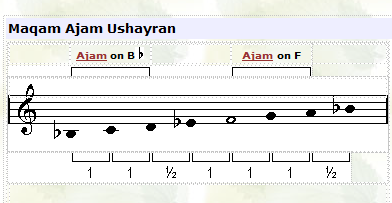
Maqam Ajam Ousheiran and Family
Maqam Bayati and Family
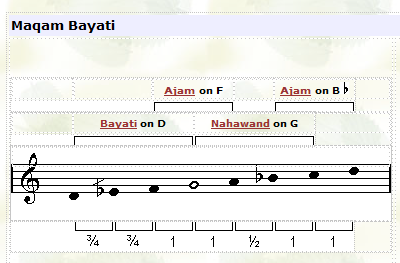
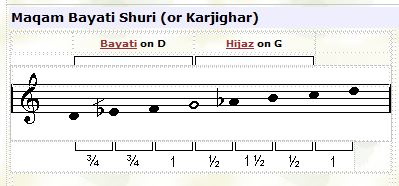
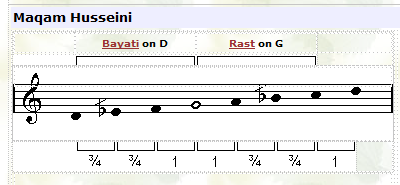
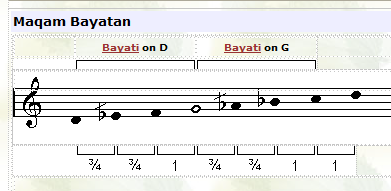
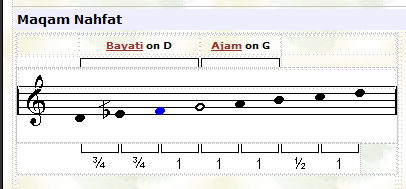
Maqam Hosseini is a very popular modulation from maqam Bayati.
Maqam Hijaz and Family
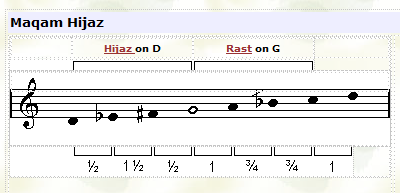
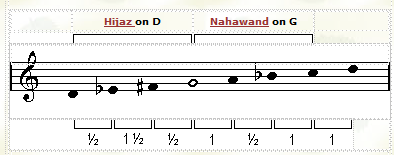
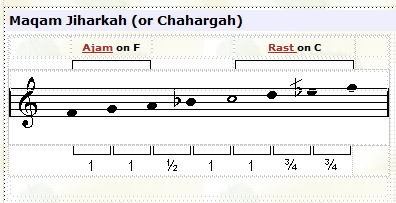
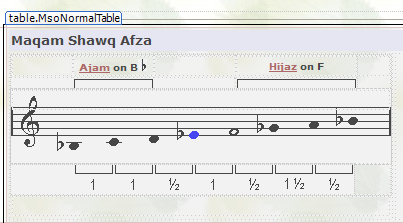
Maqam Hijaz has two forms shown above. Often the (Hijaz-Rast) form is used on the way up, and the (Hijaz-Nahawand) form is used on the way down. A very important peculiarity of maqam Hijaz is a microtonal variation where the 2nd note (E<![if !vml]>  <![endif]>) is tuned slightly higher, and the 3rd note (F#) is tuned slightly lower, so as to narrow down the 1 1/2 tone interval.
Maqam Hijaz Kar and Family
Maqam Kurd and Family
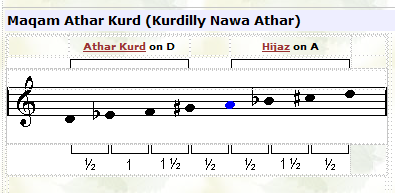
Maqam Athar Kurdi:
Notice that the first 3 notes are a partial Kurd tetrachord, which is often exploited during modulation. See also maqam Nawa Athar which resembles this maqam, except the 2nd note is 1/2 step lower.
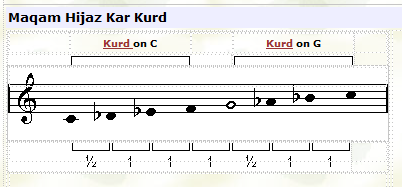
Maqam Hijaz kar Kurd
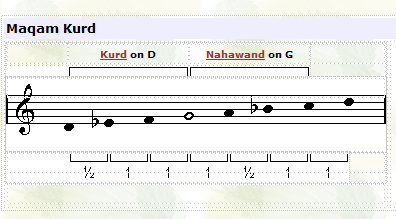
Although maqam Hijaz Kar Kurd has the same tonal intervals as maqam Kurd, it is not a transposed version of that maqam, because the dominant in this case is the 5th snote while in maqam Kurd the dominant is on the 4th note.
Maqam Nahawnd and Family
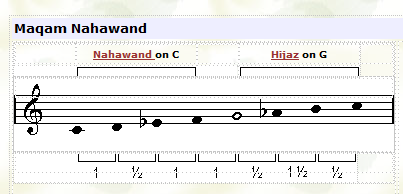
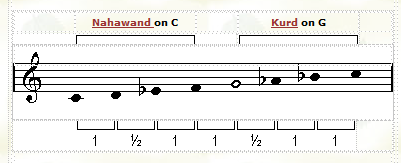
Maqam Nahawand has two versions shown above. In general the first version (Nahawand-Hijaz) is used on the way up, and the second version (Nahawand-Kurd) is used on the way down.
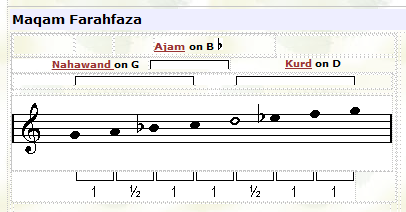
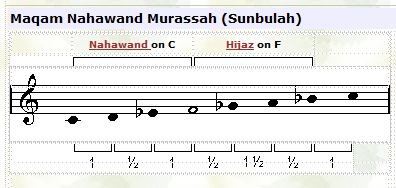
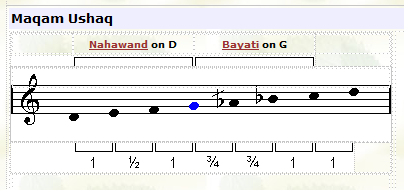
Maqam Nahawand has two versions shown above. In general the first version (Nahawand-Hijaz) is used on the way up, and the second version (Nahawand-Kurd) is used on the way down.
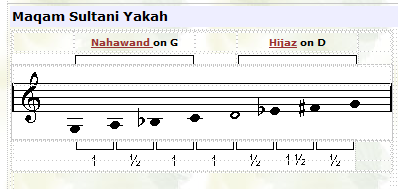
Maqam Rast and Family
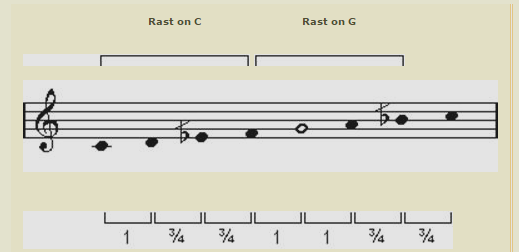
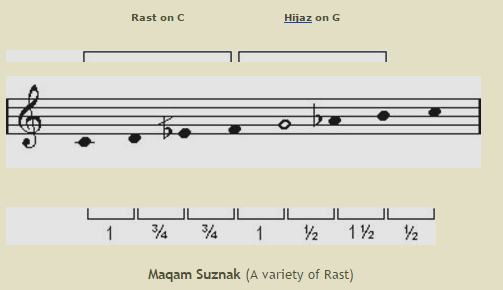
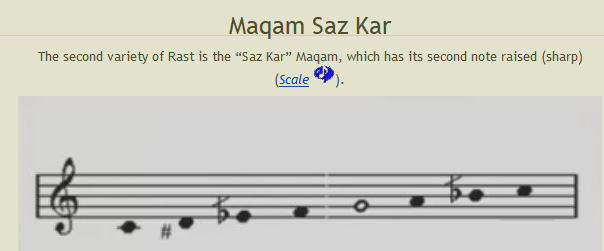
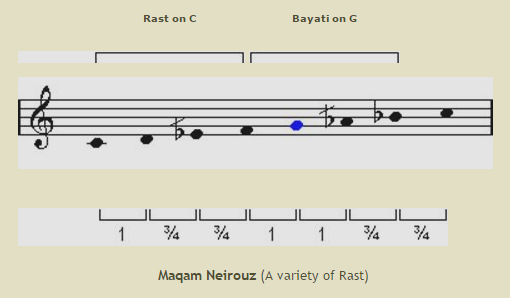
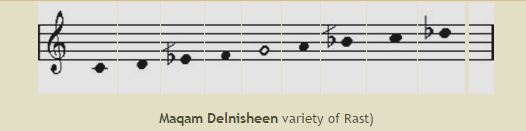
maqam Saba and Family
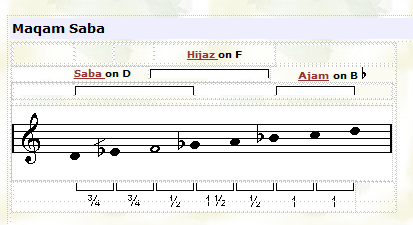
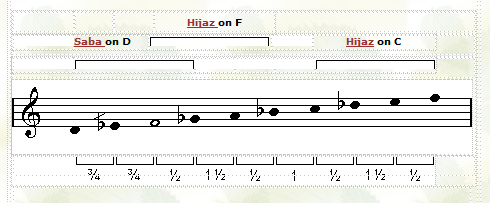
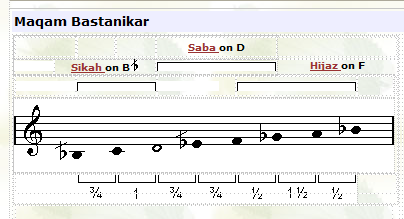
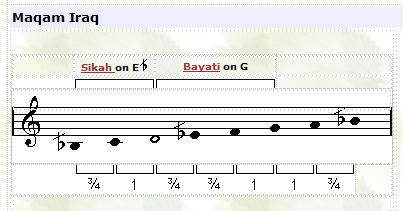
Maqam Bastanikar is unusual because it does not end on the octave (it ends on B instead of B). The third note could be the starting point of maqam Saba on D, which is a possible modulation from Bastanikar. Also since the first 5 notes have the same tonal intervals as maqam Iraq, it is common to modulate from Iraq to Bastanikar.
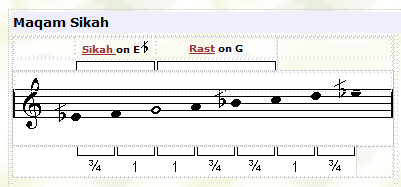
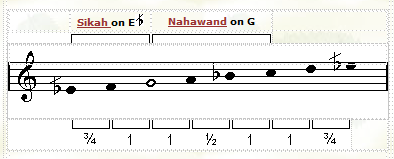
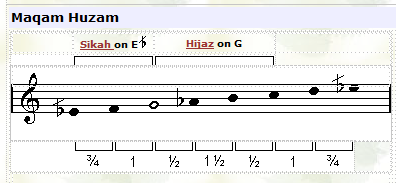
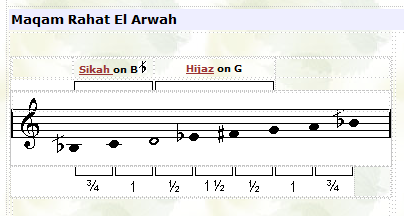
Maqqam Sikah and Family